Walker Percy and the Politics of the Wayfarer by Brian A. Smith
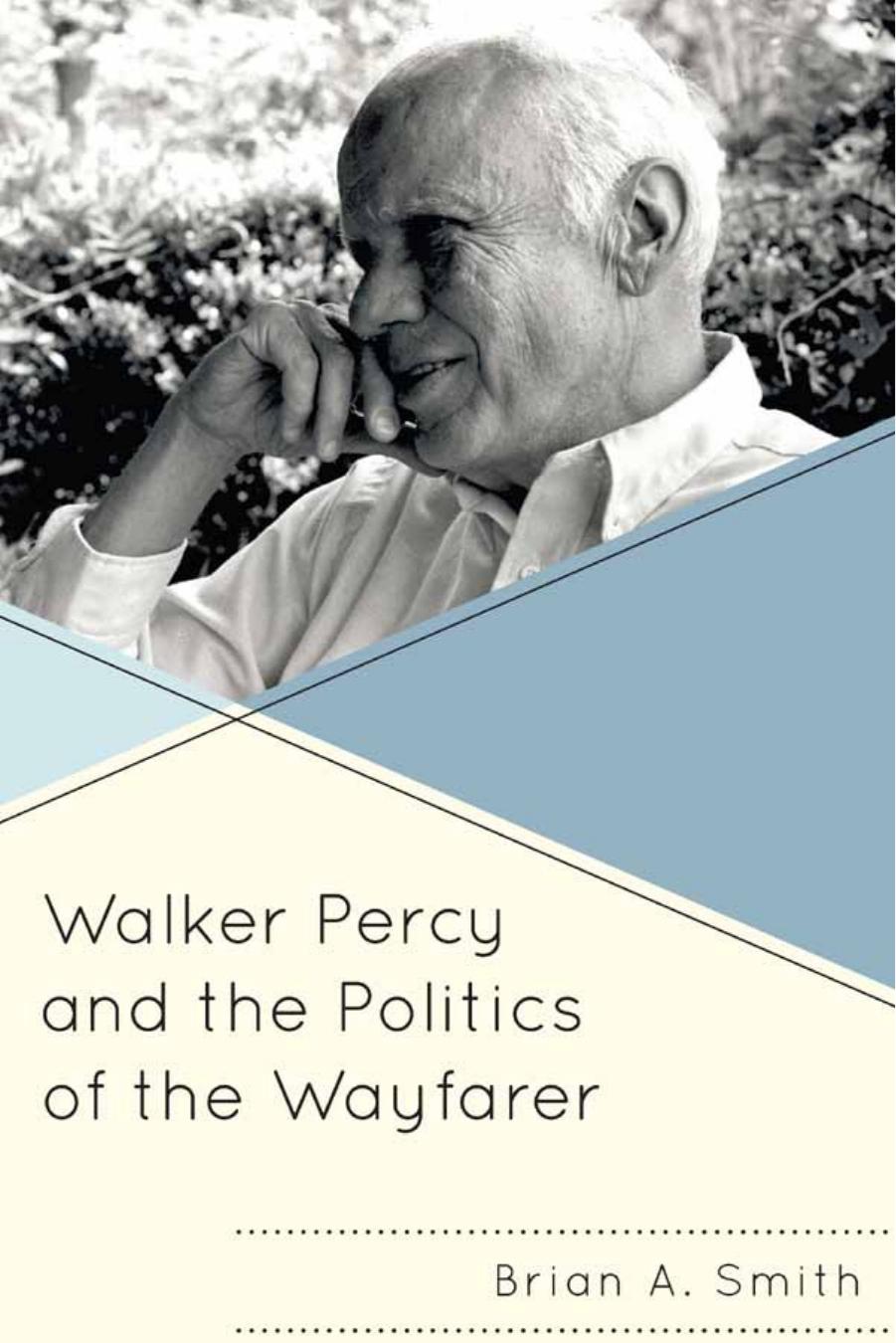
Author:Brian A. Smith
Language: eng
Format: epub, pdf
Publisher: Lexington Books, a division of Rowman & Littlefield Publishers, Inc.
Chapter 5
Dreaming of the End Times
Anxiety concerning the decline and fall of civilization appears throughout Percyâs body of work. It may be that he shared this trait with all serious moralists.1 What sets Percyâs account of this issue apart from others rests in not only his preoccupation with depicting actual disaster for what it might tell us about human nature or our politics, but also his focus on mining our obsession with the end of our society as a clue that might help explain our predicament in modern times.
The contingency âwhat if the Bomb should fall?â is not only not a cause of anxiety in the alienated man but is one of his few remaining refuges from it. When everything else fails, we may always turn to our good friend just back from Washington or Moscow, who obliges us with his sober second thoughtsââI can tell you this much, I am profoundly disturbedââand each of us has what he came for, the old authentic thrill of the Bomb and the Coming of the Last Days. Like Ortegaâs romantic, the heartâs desire of the alienated man is to see vines sprouting through the masonry. The real anxiety question, the question no one asks because no one wants to, is the reverse: What if the Bomb should not fall? What then? (MB 84â85)
As a novelist and essayist, Percy saw his role as reading the signs of our spiritual and social disorders, and rendering them intelligible to an audience that increasingly possessed a language inadequate to understanding the situation.
Percyâs method here matches his understanding of the limitations of current language. He suggested that if you tell a contemporary American he or she suffers from alienation, he or she probably will not understand your point. Indeed, without recourse to therapeutic or medical terminology, it is unclear that he or she could comprehend the diagnosis. By contrast, Percy suspected that a writer who depicts alienation in a story that engages the readerâs emotions, naming the situation in relatable terms, might have some ability to reveal the notion to his readers. Percy explained how he viewed his ambition as a writer in the following terms:
A serious novel about the destruction of the United States and the end of the world should perform the function of prophecy in reverse. The novelist writes about the coming end in order to warn about present ills and so avert the end. . . . If he did not think he saw something other people didnât see or at least didnât pay much attention to, he would be wasting his time writing and they reading. This does not mean he is wiser than they. . . . The novelist is less like a prophet than he is like the canary that coal miners used to take down into the shaft to test the air. When the canary gets unhappy, utters plaintive cries, and collapses, it may be time for the miners to surface and think things over. (MB 101)
When authors attempt
Download
Walker Percy and the Politics of the Wayfarer by Brian A. Smith.pdf
This site does not store any files on its server. We only index and link to content provided by other sites. Please contact the content providers to delete copyright contents if any and email us, we'll remove relevant links or contents immediately.
| Anthropology | Archaeology |
| Philosophy | Politics & Government |
| Social Sciences | Sociology |
| Women's Studies |
Born to Run: by Christopher McDougall(7132)
The Leavers by Lisa Ko(6950)
iGen by Jean M. Twenge(5419)
Sapiens by Yuval Noah Harari(5375)
Spare by Prince Harry The Duke of Sussex(5202)
The Kite Runner by Khaled Hosseini(5187)
Machine Learning at Scale with H2O by Gregory Keys | David Whiting(4317)
Bullshit Jobs by David Graeber(4197)
Never by Ken Follett(3963)
Goodbye Paradise(3813)
Livewired by David Eagleman(3778)
Fairy Tale by Stephen King(3403)
A Dictionary of Sociology by Unknown(3088)
Harry Potter 4 - Harry Potter and The Goblet of Fire by J.K.Rowling(3077)
The Social Psychology of Inequality by Unknown(3039)
Will by Will Smith(2930)
The Club by A.L. Brooks(2928)
0041152001443424520 .pdf by Unknown(2850)
People of the Earth: An Introduction to World Prehistory by Dr. Brian Fagan & Nadia Durrani(2740)
